Best Puzzle Games for PC: From Hidden Objects to Brain Benders

Why Most PC Puzzle Games Fail to Hook You
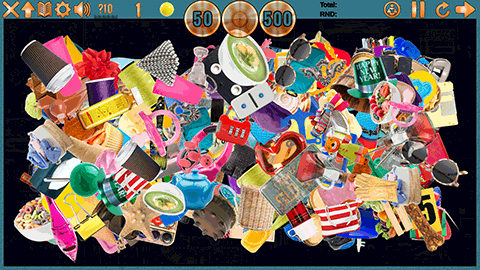
PC puzzle games that actually work don't lecture you with tutorials. They drop you into a room, show you a few objects, and let you click around until something interesting happens. You figure out the rules by breaking them, not by reading them.
The problem with most puzzle games is they either hold your hand too tightly or abandon you completely. The best puzzle games for PC find that sweet spot where you're always one click away from understanding something new, but never quite sure what that something will be.
Hidden Object Games That Actually Challenge Your Brain
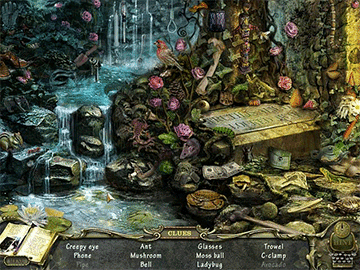
Clutter 18: Joe's Ultimate Challenge turns the typical hidden object format on its head. Instead of hunting for random items in static scenes, you're working through evolving environments where the challenge changes as you play. Each scene presents a different type of visual puzzle - sometimes you're matching pairs, other times you're solving mini-games that unlock new areas to explore.
What makes this different from other hidden object games is the pacing. Where most titles have you scanning the same cluttered room for twenty minutes, Clutter 18 keeps introducing new mechanics every few levels. One moment you're organizing items by category, the next you're solving a logic puzzle to reveal hidden compartments. The learning curve takes a few levels to click, but once you understand how each scene type works, you'll find yourself thinking several moves ahead.
Mystery Case Files: Return to Ravenhearst takes a more atmospheric approach. You're exploring the cursed Ravenhearst estate, following a ghostly warning deeper into rooms that shift and change as you solve puzzles. The game combines traditional hidden object scenes with inventory-based adventure puzzles - you'll find a key in one room that unlocks a drawer three rooms back, revealing a clue that changes how you approach the next area.
The tension here comes from not knowing what each room will demand of you. Some scenes require careful observation to spot well-hidden objects, while others present mechanical puzzles where you're manipulating gears or rewiring electrical panels. The estate feels genuinely unsettling, with ambient sounds and visual details that make you want to solve puzzles quickly just to move on to safer ground.
Renovation Puzzles That Scratch the Organization Itch
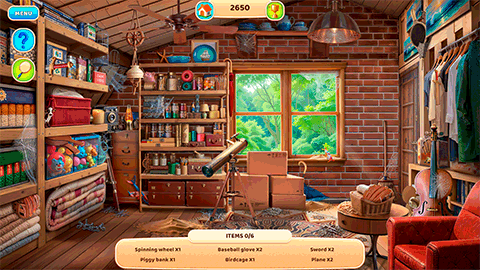
Home Rescue: Clean and Restore appeals to anyone who's ever felt satisfaction from organizing a messy room. You're working through damaged homes, clearing debris, sorting items, and gradually restoring each space to livability. The puzzle element comes from figuring out the most efficient cleaning order - some areas can't be accessed until you remove certain obstacles, and you're working with limited energy that regenerates over time.
Each room presents a different organizational challenge. Kitchen scenes have you sorting dishes by type and size, while living rooms require you to arrange furniture in functional layouts. The game tracks your progress with before-and-after photos that show the dramatic transformation, which provides more satisfaction than you'd expect from what's essentially a digital cleaning simulator.
The renovation aspect adds another layer - as you earn money from completed jobs, you can upgrade your own cottage with new furniture and decorations. This creates a nice feedback loop where solving puzzles improves both the client's space and your own home base.
Best Puzzle Games for PC: Atmospheric Adventures
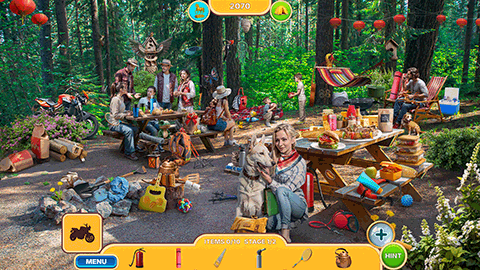
Hidden Weekend: The American Getaway combines hidden object gameplay with life simulation elements. You're helping someone escape their stressful daily routine by creating the perfect retreat experience. This means finding specific items needed for different activities - camping gear for outdoor adventures, cooking supplies for comfort meals, art materials for creative pursuits.
What sets this apart is how the hidden object scenes connect to a larger goal. Instead of random item hunting, everything you find contributes to building your ideal getaway. The scenes are beautifully illustrated American landscapes - mountain cabins, lakeside camps, desert retreats - and finding items feels like you're actually preparing for these adventures.
The pacing encourages you to take your time and enjoy the scenery rather than rushing through scenes. There's no timer pressure, and the game rewards thorough exploration with bonus items that unlock additional customization options for your retreat.
Dark Town Secrets: The Last Burger takes puzzle solving in a completely different direction. You're investigating a mystery in a small town where something sinister is happening at the local diner. The puzzle elements involve piecing together clues from different locations, solving logic puzzles that reveal character motivations, and making connections between seemingly unrelated events.
The game creates genuine tension through its puzzle design. You're not just finding objects - you're analyzing evidence, cross-referencing witness statements, and gradually uncovering a conspiracy that goes deeper than a simple restaurant mystery. Each solved puzzle reveals another piece of the larger story, and the final revelation recontextualizes everything you've discovered.
Choosing Your Puzzle Game Style
These games represent different approaches to puzzle-solving on PC. Clutter 18 focuses on quick thinking and pattern recognition, with new challenges every few minutes. Return to Ravenhearst emphasizes atmospheric exploration and inventory management, requiring you to think several rooms ahead. Home Rescue appeals to organizational instincts and provides satisfying visual progress, while Hidden Weekend offers relaxed discovery without time pressure. Dark Town Secrets combines deductive reasoning with narrative investigation.
The cognitive load varies significantly between these styles. Hidden object games like Clutter 18 keep you actively scanning and clicking, while renovation puzzles like Home Rescue involve more planning and resource management. Mystery adventures require you to remember details across multiple scenes and make logical connections between clues.
Your puzzle preferences probably depend on whether you enjoy rapid-fire challenges or prefer to work through problems methodically. Some players love the immediate feedback of finding hidden objects, while others prefer the longer satisfaction arc of gradually solving a complex mystery or restoring an entire house.
Why GameFools Works for Puzzle Discovery
PC puzzle games let you fail without consequences, so you might as well try the weird option. That cleaning game might surprise you more than another match-3 clone. GameFools specializes in these kinds of pleasant surprises - games that sound boring in description but hook you once you start playing.
Most puzzle games show their true nature within the first few levels. You'll know quickly whether you enjoy the pacing, the visual style, and the type of thinking each game rewards. The advantage of exploring lesser-known titles is finding puzzle mechanics that bigger games haven't copied yet.