Delicious: The First Course Review - A Masterful Remake Worth Savoring

A Fresh Take on a Time Management Classic
Sometimes the best way forward is to look back. While many game series pile on features until they collapse under their own weight, Delicious: The First Course takes the opposite approach - stripping away years of accumulated complexity to rediscover what made the original Delicious Deluxe so compelling. This isn't just nostalgia bait; it's a carefully crafted reimagining that proves Emily's story works best when told with focus and heart.
The Core Loop That Hooks You

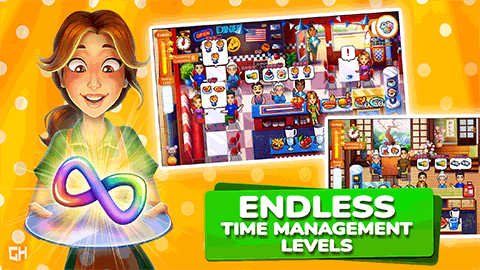
Your five-minute gameplay cycle revolves around a satisfying dance of preparation and service. You'll start each level by prepping ingredients - chopping vegetables, marinating meats, setting up cooking stations. Then customers flood in, and the real challenge begins. Click to seat guests, take their orders, cook their meals across multiple stations, serve hot food, and clear tables for the next wave. What starts as manageable chaos in the American diner becomes a frantic juggling act once you reach the spice-heavy Indian restaurant levels.
The magic happens in those split-second decisions: do you start the next customer's appetizer or focus on getting the current order's main course plated? Each restaurant introduces new cooking mechanics - the Mexican kitchen has you timing tortilla presses while managing a salsa station, while the Indian levels demand you balance multiple curry pots with different cooking times. By level 20, you're mentally tracking six different timers while customers tap their feet impatiently.
Why This Delicious: The First Course Review Matters
What makes this remake special is how it respects your time. Unlike modern time management games that stretch thin across 200+ levels, these 80 stages feel purposeful. Each of the eight restaurants gets exactly ten levels to teach you its quirks, build complexity, then send you off with mastery. The pacing never drags - you're always learning something new or pushing your multitasking skills further.
The upgrade system strikes a perfect balance between meaningful choice and overwhelming complexity. You'll spend your earnings on practical improvements: faster ovens that shave precious seconds off cooking times, additional seating that lets you serve more customers simultaneously, or entertainment systems that keep waiting guests happy longer. These aren't just numbers going up - you feel the difference immediately when your upgraded espresso machine lets you serve coffee in two clicks instead of four.
The Emotional Experience of Efficiency
There's something deeply satisfying about watching Emily grow from fumbling rookie to confident chef. Early levels have you struggling to manage three customers at once, frantically clicking between stations as orders pile up. But by the final Indian restaurant, you're orchestrating complex meal sequences with the precision of a conductor - starting the rice as you plate the appetizer, timing the naan to finish exactly when the curry is ready.
The game creates genuine tension without feeling punitive. Miss a timing window and customers get slightly impatient, not furious. Fail a level and you restart immediately, not after sitting through lengthy animations. This respect for player time extends to the mini-games too - quick skill challenges that break up the restaurant action without derailing your momentum.
Staff hiring adds another layer of strategic thinking. Your waiter can take orders while you cook, but costs money that could go toward equipment upgrades. The entertainer keeps customers happy during wait times, but only if you position them correctly. These decisions matter because resources stay tight throughout - you're always weighing immediate efficiency gains against long-term improvements.
Worth Noting: Learning Curve and Complexity
The difficulty ramp takes about fifteen levels to find its stride. Early stages might feel almost too simple for time management veterans, but this foundation pays off when the game starts layering on complexity. By the time you're managing the Indian restaurant's multiple spice levels and cooking methods, you'll appreciate having those fundamentals locked down.
The decoration system, while charming, feels less essential than the core gameplay. You can spend coins on purely cosmetic restaurant improvements, but the functional upgrades always take priority. It's a nice creative outlet between the intense cooking levels, but don't expect it to dramatically change how the game plays.
The Verdict: A Remake Done Right
Delicious: The First Course succeeds because it understands what made the original special, then polishes those elements to a shine. This is comfort food gaming at its finest - familiar enough to feel like coming home, refined enough to surprise you with new challenges. The 80-level structure never overstays its welcome, and the endless mode provides plenty of replay value once you've mastered the campaign.
If you've been curious about time management games but intimidated by modern complexity, this is your perfect entry point. Longtime fans will appreciate how the remake captures the series' soul without the feature bloat of later entries. At GameFools, we love games that respect both your intelligence and your time - Delicious: The First Course delivers both in generous portions.
Ready to play? Download the free trial of Delicious: The First Course and start playing today.