
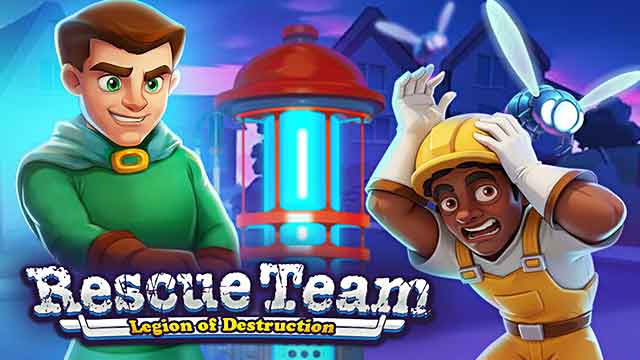
Rescue Team: Legion of Destruction Review: When Chaos Becomes Your Comfort Zone
When Time Management Gets Personal
Most time management games feel like spreadsheets with pretty graphics. Click here, wait there, optimize this. But when you're staring at a collapsed hospital with civilians trapped inside while Dr. Armageddon's machines advance on your position, something different happens. Your mouse clicks start carrying weight.
Rescue Team: Legion of Destruction transforms the familiar time management formula by making every decision feel urgent and meaningful. You're not managing a farm or restaurant - you're the last line of defense against engineered catastrophe.
The Five-Minute Panic Cycle
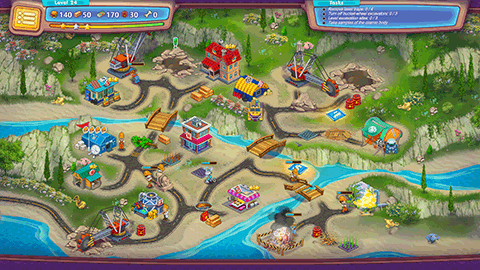
Each level drops you into a disaster zone where everything demands immediate attention. You dispatch workers along predetermined paths: one team clears rubble blocking the hospital entrance (takes about 15 seconds per pile), another repairs the power grid feeding life support systems, while a third operates helicopters to airlift civilians from rooftops.
The genius lies in the constant interruptions. Just as your debris-clearing team finishes their route, Dr. Armageddon's machines launch another attack, creating fresh obstacles. You're forced to reassign workers mid-task, burning precious seconds deciding whether to finish the current objective or pivot to the new crisis.
Resource management adds another layer of stress. Each worker costs energy to deploy, and energy regenerates slowly. Sending everyone to tackle one crisis might solve it faster, but leaves you helpless when the next wave hits. I found myself hovering over the deploy button, calculating whether I had enough juice left for the inevitable surprise attack.
Where Strategy Meets Storytelling
The campaign follows Dr. Armageddon's transformation from brilliant engineer to global threat, revealed through brief cutscenes between levels. What makes this work is how the story integrates with gameplay mechanics. Early levels feature simpler disasters - single building collapses, isolated fires. As Dr. Armageddon's AI becomes more sophisticated, levels introduce cascading failures where one damaged system triggers multiple secondary crises.
By mid-campaign, you're juggling power grid failures that disable your helicopters just as civilians need evacuation from flooding caused by broken water mains. The complexity ramps up naturally, teaching you to think several moves ahead while maintaining the frantic pace that makes time management games addictive.
Power-ups provide crucial breathing room during these escalating challenges. Speed boosts let workers move faster for 30 seconds, while resource generators provide emergency energy when you've overcommitted. The trick is saving them for genuine emergencies rather than minor inconveniences - a lesson learned through several failed attempts at three-star ratings.
The Weight of Every Click
What separates this from typical clicking games is the moral dimension. When you choose to save the shopping mall before the apartment complex, you're not optimizing points - you're deciding who gets rescued first. The game doesn't punish these choices mechanically, but the implied consequences add emotional weight to resource allocation decisions.
This psychological element creates genuine tension during the timed sequences. I caught myself holding my breath during close calls, not because of arbitrary difficulty spikes, but because the scenarios feel consequential. Clearing debris from a school entrance while watching the timer count down generates the same stress as actual emergency response.
Worth Noting: Learning Curve and Pacing
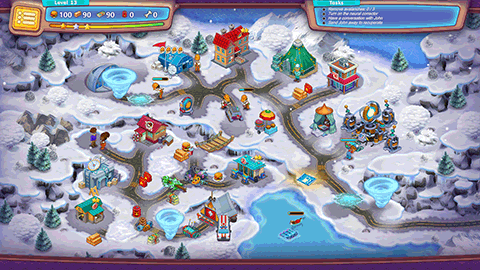
The first few levels ease you into the mechanics gently, but the complexity accelerates quickly once multiple disaster types appear simultaneously. Players new to time management games might need several attempts to master the worker deployment timing and resource conservation strategies. The game provides hints, but success ultimately requires developing your own priority system through trial and error.
Some levels also feature waiting periods while workers complete longer tasks, creating brief lulls in the otherwise frantic pacing. These moments work well for planning your next moves, though they occasionally interrupt the game's otherwise excellent momentum.
The Verdict: Strategic Chaos Done Right
After multiple campaign runs, I can confirm this game respects your brain cells. The combination of meaningful choices, escalating complexity, and emotional stakes creates something more engaging than typical genre offerings. Each successful rescue operation feels earned rather than inevitable.
If you want a time management game that doesn't insult your intelligence, you found it. The strategic depth rewards careful planning while the disaster scenarios maintain constant urgency. Players who enjoy games where quick thinking meets resource optimization will find plenty to love here.
Try the GameFools demo first - you'll know within 10 minutes if this frantic rescue style works for you. For those seeking time management games with actual stakes and smart design, Rescue Team: Legion of Destruction delivers exactly the kind of strategic chaos that makes you forget you're playing a casual game.
Ready to play? Download the free trial of Rescue Team: Legion of Destruction and start playing today.