Rescue Team: Phantom Crisis Review - Time Management with a Supernatural Twist
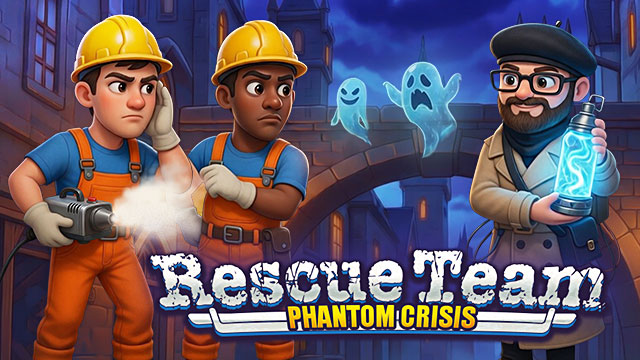
When Ghosts Crash Your Emergency Response Plans
Tired of time management games where the biggest challenge is remembering to click on buildings? Rescue Team: Phantom Crisis fixes that by throwing actual chaos at your carefully laid plans. Just when you think you've got the debris clearing sequence down pat, a ghostly figure possesses your power generator and everything goes dark. Suddenly your rescue workers are stumbling around blind while civilians panic in the streets.
This isn't your typical click-and-wait building game. The supernatural elements create genuine unpredictability that kept me on edge for hours.
The Core Loop: Controlled Chaos
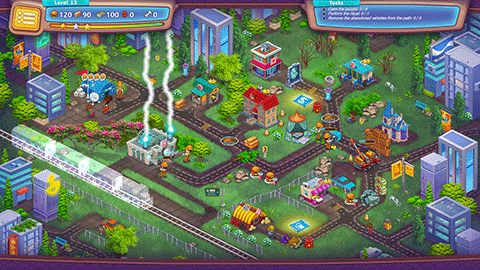
Every level drops you into a city district overwhelmed by paranormal disaster. Your emergency crews need to clear rubble, restore power, and evacuate civilians before time runs out. The basic mechanics feel familiar - click to select workers, drag them to tasks, collect resources from completed objectives. But those ghosts change everything.
Here's what a typical 10-minute level looks like: I start by sending firefighters to put out the obvious blazes while engineers tackle the power grid. Seems straightforward until a phantom materializes inside my newly repaired generator. The lights go out, my workers slow to a crawl, and more ghosts start spawning in the darkness. Now I'm frantically clicking my Phantom Hunter unit to exorcise the damn thing while civilians trapped in a collapsed building wait for rescue.
The combo system rewards chaining tasks together - clear debris, then immediately repair the building underneath, then collect the resources it produces. Each successful chain adds precious seconds to your timer and multiplies your score. But ghosts break those chains by possessing key infrastructure or blocking critical paths.
I learned this the hard way on Level 8. I had a beautiful five-task combo lined up: clear the street, fix the ambulance, rescue the family, repair the hospital, collect medical supplies. Then a ghost possessed the ambulance mid-repair. My engineer got spooked and wandered off. The combo died, my timer kept ticking, and I barely scraped through with one star.
What Makes the Supernatural Elements Work
The ghosts aren't just visual flair - they fundamentally mess with your planning. In regular time management games, you can usually optimize a perfect sequence and execute it. Here, you need backup plans for your backup plans.
Phantom Hunters become your most valuable units, but they move slower than regular workers and take time to complete their exorcisms. Do you send them to clear the ghost blocking your main path, or the one possessing the power station? Choose wrong and you're scrambling to recover while the clock runs down.
The power grid adds another layer of strategy. Dark areas spawn more ghosts and slow your workers significantly. I spent entire levels prioritizing generators over rescues, which felt counterintuitive but proved essential. One memorable mission had me racing to restore power to a subway station while the platforms filled with panicked commuters. Every second without light meant more supernatural interference.
Boss levels ramp up the chaos with multiple ghost types. Some possess machines, others block paths, and a few actually steal your resources. The final district threw everything at me simultaneously - fires, collapsed buildings, power failures, and ghosts everywhere. I must have replayed it six times before finding a sequence that worked.
Resource Management Under Pressure
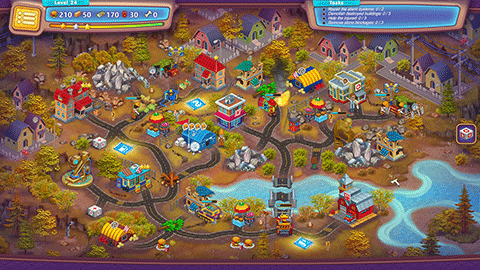
Unlike city builders where you accumulate resources over time, everything here happens in real-time bursts. Wood comes from cleared debris, metal from demolished structures, gems from rescued civilians. You need these materials immediately to upgrade buildings that boost your workers' efficiency.
The restaurant upgrade reduces worker fatigue, letting them handle more tasks per level. The workshop speeds up repairs. The communication center reveals hidden survivors. But upgrades cost precious resources and take time to build - time you might not have while ghosts wreak havoc.
I found myself making tough resource allocation decisions constantly. Upgrade the sawmill for faster wood production, or save those materials to repair the critical bridge? The wrong choice meant watching my carefully planned rescue operation fall apart as workers ran out of energy or couldn't reach trapped civilians.
The scoring system rewards efficiency with star ratings, but going for three stars often meant taking risks that backfired spectacularly. Two-star completions became my comfortable middle ground - fast enough to feel accomplished, safe enough to actually finish levels.
Pacing That Actually Respects Your Time
Most levels take 8-12 minutes, perfect for quick gaming sessions. The campaign includes 50+ missions across different city districts, each introducing new challenges without overwhelming complexity. Early levels teach the basics, middle missions add ghost varieties, and later stages combine everything into frantic multi-objective scenarios.
The difficulty curve hits a wall around Level 15 when multiple ghost types appear simultaneously. I nearly bounced off the game there, but pushing through revealed some of the most satisfying time management gameplay I've experienced. Once you understand the rhythm of ghost spawning and power management, earlier levels become almost meditative to replay for better scores.
No level overstays its welcome. When you succeed, it feels earned. When you fail, you immediately understand why and want to try again. That's the mark of excellent pacing in this genre.
Worth Noting: The Learning Curve Bites
This game will humble you. The first few hours involve a lot of failed attempts as you figure out ghost behavior patterns and optimal worker deployment. The tutorial covers basics but can't prepare you for the chaos of managing five simultaneous crises while phantoms sabotage your infrastructure.
Some players might find the supernatural unpredictability frustrating if they prefer pure optimization puzzles. But for me, that unpredictability became the main attraction. Every replay felt different because ghost spawns and possession targets vary slightly.
The Verdict: Paranormal Chaos Done Right
Rescue Team: Phantom Crisis succeeds because it uses its supernatural theme to solve time management gaming's biggest problem - predictability. The ghost mechanics create genuine tension and force adaptive thinking rather than rote optimization.
Players who enjoy games like Roads of Rome or Moai will love this, but expect a steeper learning curve and more active decision-making. The paranormal elements aren't just cosmetic - they transform familiar mechanics into something that feels fresh and challenging.
If you want time management that keeps you guessing and rewards quick thinking over perfect planning, this delivers. Just don't expect to master it quickly. The ghosts make sure of that.
Ready to play? Download the free trial of Rescue Team: Phantom Crisis and start playing today.