Is Luxor Still Worth Playing in 2026? This Classic Marble Shooter Hits Different
When Simple Rules Create Maximum Tension
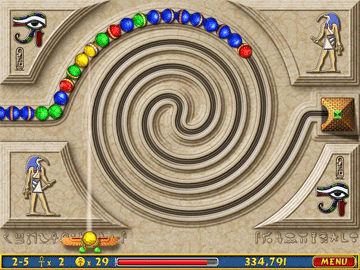
Tired of match-3 games that treat you like a slot machine? Luxor strips away the daily challenges, energy systems, and premium currencies to focus on one thing: pure marble-shooting tension. This 2005 classic throws colored spheres at you in relentless chains, and your job is simple—match three before they reach the pyramid. Simple rules, sweaty palms.
I fired up Luxor expecting a quick nostalgia trip and ended up playing until 2 AM. The game that hooked casual players twenty years ago still has that "just one more level" magic, but now it feels like a relic from a better era of puzzle design.
The Core Loop That Never Gets Old
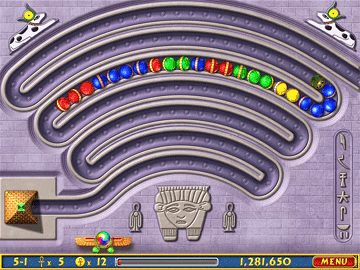
Every level starts the same way: colorful spheres roll along a winding track toward your pyramid while you control a scarab shooter at the bottom. Fire spheres into the chain to make matches of three or more, watch them disappear, and pray the resulting gaps create chain reactions. Miss too many shots or take too long, and those spheres punch through your defenses.
The genius is in the pressure. Unlike turn-based puzzle games where you can sit and ponder, Luxor's chains never stop moving. You're constantly making split-second decisions: shoot for the easy match or risk a difficult bank shot that could trigger a massive combo? Save your power-up sphere for later or use it now to prevent disaster?
Those power-ups appear when you make consecutive matches, and they transform desperate situations into satisfying victories. The reverse sphere sends the entire chain backward, buying precious seconds. The accuracy booster lets you thread impossible shots through tiny gaps. The chain explosion clears huge sections instantly. Learning when to deploy each one separates casual players from marble-shooting masters.
Why Luxor Still Feels Fresh
Modern match-3 games bombard you with notifications, limited moves, and pay-to-win mechanics. Luxor respects your intelligence instead. No energy bars dictate when you can play. No ads interrupt your flow state. No premium currencies tempt you to skip the challenge.
The difficulty curve builds naturally across 88 levels. Early stages let you learn the basics with slow-moving chains and generous margins for error. By level 30, you're juggling multiple pathways, ricocheting shots off walls, and using reflector power-ups to make seemingly impossible matches. The game teaches through experience, not tutorials.
What surprised me most was the strategic depth hiding beneath those simple rules. Managing your sphere queue becomes crucial in later levels—you can hold one sphere in reserve and swap it with your active shot. This small mechanic opens up complex planning: save that red sphere for three levels, use the blue one to set up a chain reaction, then deploy the red for maximum damage.
The Sights and Sounds of Ancient Egypt
Luxor's Egyptian theme isn't just cosmetic window dressing. The scarab shooter, pyramid defense setup, and mystical power-ups create a cohesive fantasy that enhances the gameplay. You're not just matching colors—you're a divine scarab battling the god Set to protect sacred pyramids.
The soundtrack deserves special mention. Instead of the generic electronic beats common in puzzle games, Luxor features orchestral music with Middle Eastern instruments that builds tension during difficult sequences. When chains speed up in later levels, the music accelerates too, creating an audio-visual feedback loop that makes your heart race.
Visually, the original Luxor shows its 2005 roots. Backgrounds are static and sometimes bland compared to modern games. The sphere graphics are clean but basic. However, the visual clarity serves the gameplay—you never struggle to distinguish colors or track moving elements during frantic moments.
How It Compares to Modern Marble Shooters
Playing Luxor after years of Zuma variants reveals how different design philosophies create different experiences. Where Zuma places you in the center with a rotating cannon, Luxor's horizontal scarab shooter changes everything. You're always firing upward, which means bank shots and ricochet strategies become more important than direct aim.
The pacing differs too. Zuma presents one continuous chain that you gradually whittle down. Luxor sends spheres in waves—clear one section and another arrives, often from multiple pathways. This creates natural breathing room between intense moments, preventing the finger fatigue that plagues other marble shooters.
Recent entries in the Luxor series added adventure modes, boss battles, and RPG elements. The original feels pure by comparison—no story cutscenes interrupt your flow, no character upgrades complicate the formula. Sometimes less really is more.
The Challenge That Keeps You Coming Back
Luxor's difficulty spikes hit at perfect moments. Just when you think you've mastered the mechanics, level 45 introduces branching pathways where spheres arrive from multiple directions. Level 60 adds speed boosts that turn leisurely aiming into frantic reaction tests. The final levels combine every mechanic into marble-shooting nightmares that demand perfect execution.
But the game never feels unfair. Every failure teaches you something—maybe you need to prioritize chain reactions over individual matches, or perhaps you're hoarding power-ups when you should spend them aggressively. The restart button becomes your friend, not your enemy.
What keeps me returning isn't just the challenge, but the satisfaction of improvement. Levels that once seemed impossible become routine as your pattern recognition and strategic thinking develop. That progression feels earned in a way that modern games with their participation trophies and inflated scores rarely achieve.
Worth Noting: It Takes Time to Click
Luxor doesn't reveal its depth immediately. The first dozen levels feel almost too simple, especially if you're coming from more complex puzzle games. Stick with it. The game deliberately starts slow to build your fundamental skills—accurate aiming, quick color recognition, basic chain reaction setup.
The control scheme also requires adjustment. Unlike mouse-heavy games, Luxor works best with smooth, deliberate movements. Frantic clicking leads to missed shots and wasted opportunities. Learning to find your rhythm takes a few sessions, but once it clicks, you'll wonder how you ever played differently.
The Verdict: Timeless Design Beats Modern Bloat
Is Luxor still worth playing in 2026? Absolutely. While newer games offer flashier graphics and more complex progression systems, few match Luxor's focused intensity. This is puzzle gaming distilled to its essence—clear rules, escalating challenge, and immediate feedback that keeps you in the zone for hours.
The game I played in 2005 is the same one that kept me up until 2 AM last week. No patches changed the formula, no live service updates diluted the vision. Luxor proves that when you nail the fundamentals, you don't need annual updates or premium battle passes.
If you miss the days when puzzle games made your palms sweat instead of your wallet lighter, Luxor delivers. Just don't blame me when "one quick level" turns into a three-hour marble-shooting marathon.
Ready to play? Download the free trial of Luxor and start playing today.