The Best Match 3 Games for PC That Actually Justify Your Screen Size
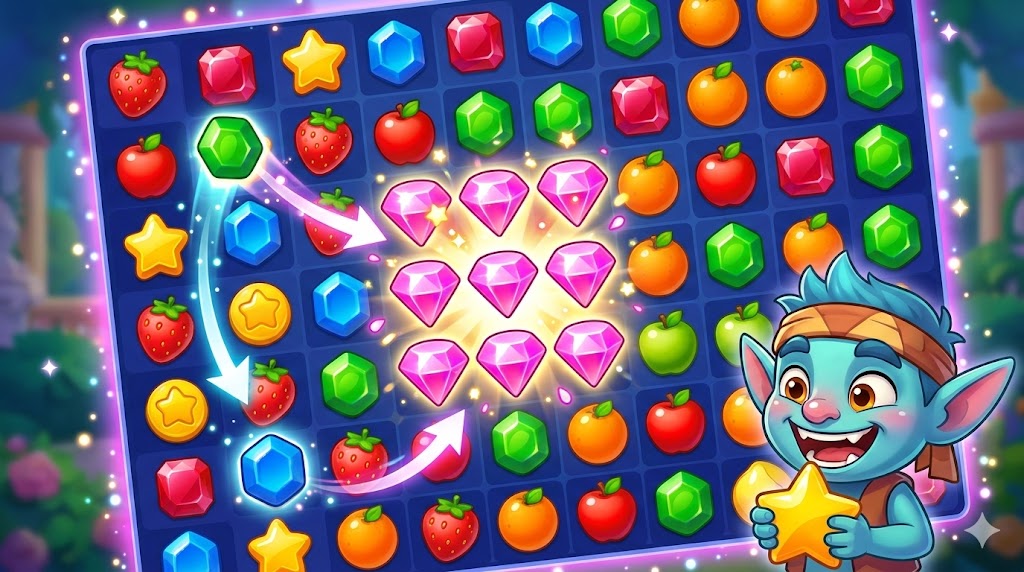
Why PC Match 3 Games Need More Than Just Bigger Gems
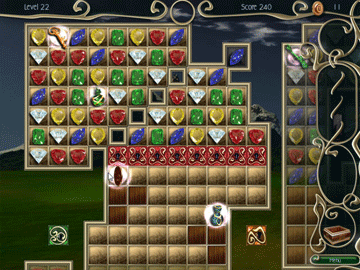
I spent three hours yesterday clicking through gems in Jewel Match 3, and somewhere around castle number two, I realized why most match 3 games feel hollow on PC. Your mouse cursor hovers over a grid that could fit on a phone screen, surrounded by empty desktop space, while you swap identical-looking gems with no real purpose beyond clearing the board.
Good PC match 3 games need more than gem-swapping - they need reasons to keep playing beyond hitting the next level. The games that work on PC either layer in city-building, tell actual stories, or create time pressure that makes every move count. After testing dozens of titles, these six games each solve different problems with the genre's mobile-first design.
Best Match 3 Games for PC: Garden Building That Actually Matters
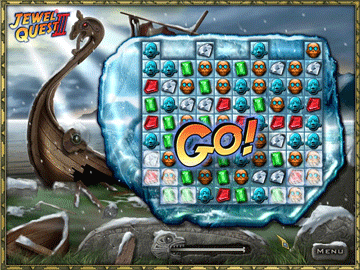
Jewel Match 3 hooks you with a simple promise: plant magical gardens and rebuild five castles. But the genius lies in how your match 3 performance directly funds your construction projects. Clear a level efficiently, and you earn enough coins to buy that ornate fountain. Struggle through it, and you're stuck with basic decorations.
The garden-building feels substantial because choices stick around. Place a rose bush in the wrong spot, and it'll bother you for hours until you can afford to move it. This makes you actually care about the outcome instead of just mindlessly matching gems. The only friction comes from learning which power-ups work best - the first few levels feel slower while you figure out the optimal clearing patterns.
Skip this if you want pure puzzle action without the decoration management. Try it if you've ever enjoyed city builders or want your matching to fund something tangible.
Racing Across Continents for the Golden Board
Jewel Quest 3 throws you into a globe-trotting race where every level represents a different location in your hunt for the legendary Golden Jewel Board. The twist: you're not just matching gems, you're turning the background tiles gold by making matches on top of them. Clear the entire board's background, and you advance to the next country.
This creates genuine urgency because some tiles hide in corners or require specific gem combinations to reach. I've spent ten minutes staring at a board with one stubborn tile, plotting three moves ahead to create the right cascade. The geographical theming helps too - levels in Egypt feel different from those in the Amazon, with unique tile patterns and obstacles that match each location.
The learning curve hits around level 15 when the game introduces locked tiles and time pressure. Some players bounce off here, but push through and you'll find a match 3 game with actual geographic progression that feels earned.
Ancient Totems That Transform Your Strategy
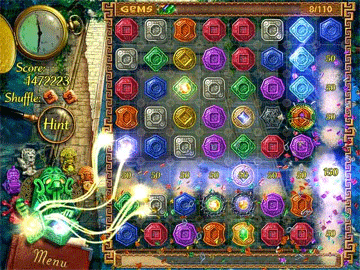
The Treasures of Montezuma centers on totem activation - special artifacts that trigger when you match gems in specific patterns around them. Match three red gems near a fire totem, and it clears an entire row. Line up blue gems by a water totem, and it floods the board with bonus points.
The totem system forces you to think beyond simple three-in-a-row matching. You're constantly scanning for totem opportunities, sometimes ignoring obvious matches to set up bigger combinations. When totems activate, the screen explodes with effects that make you want to trigger them again immediately. It's like having slot machine jackpots scattered across your puzzle board.
The difficulty spikes around world three when multiple totems appear per level. Managing four different activation patterns while clearing obstacles demands real concentration. Players who prefer relaxed matching might find this stressful, but strategy fans will love the layered decision-making.
Aquarium Building with Personality
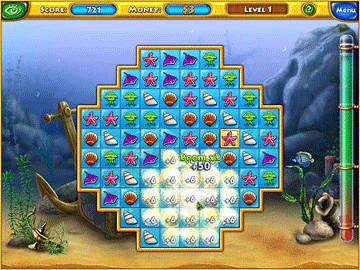
Fishdom uses match 3 levels to earn coins for decorating your virtual aquarium. Buy fish, plants, decorations, and watch your underwater world come alive. The fish have distinct personalities - some are shy, others aggressive, and they interact with each other and your decorations in amusing ways.
What makes this work is the fish behavior system. Your angelfish might hide behind plants when you add a larger fish, or your clownfish might play in the bubbles from your aerator. These interactions happen in real-time between levels, giving you reasons to check back on your aquarium beyond just playing more puzzles.
The match 3 levels themselves lean traditional, but they're tuned for steady progression rather than difficulty spikes. You'll rarely get stuck for more than a few attempts, keeping the focus on aquarium management. The main limitation is repetitive level design - after 30 levels, you've seen most of the puzzle mechanics.
Archaeological Adventure Across Ancient Civilizations
Atlantis Quest frames your gem-matching as an archaeological expedition through seven ancient civilizations, from Babylon to Atlantis itself. Each civilization introduces new tile types and obstacles that reflect its culture - Egyptian levels feature hieroglyph tiles, while Mayan stages include jade artifacts.
The archaeological theme runs deeper than cosmetic changes. You're literally uncovering artifacts through puzzle completion, and each discovery advances the storyline about finding Atlantis. The narrative provides context for why you're matching gems instead of just presenting endless identical levels.
Difficulty curves upward steadily rather than in frustrating spikes. By the time you reach Atlantis, you're handling complex board layouts with multiple objectives, but the progression feels natural. The main weakness is predictable level structure - most stages follow similar clear-the-board patterns despite the thematic variety.
Marble-Shooting Precision in Ancient Egypt
Luxor 2 HD breaks from traditional grid-based matching by having you shoot colored marbles into moving chains before they reach the end of winding tracks. Your scarab beetle shoots from the bottom of the screen while marble chains snake through Egyptian-themed levels toward pyramid exits.
This creates constant time pressure that traditional match 3 games lack. You're not studying the board leisurely - marble chains keep advancing, forcing quick color recognition and precise aiming. Miss a few shots, and the chain reaches the pyramid, ending your game. The mechanical precision required feels more like playing pool than matching gems.
The Egyptian setting enhances the marble-shooting with detailed pyramid backgrounds and atmospheric sound effects. Each level represents a different temple or monument, giving visual variety to what could become repetitive gameplay. The main challenge is the learning curve - players expecting traditional matching might struggle with the real-time aiming requirements.
Which Match 3 Game Fits Your Play Style
These games all fix different problems with boring match 3 games. Jewel Match 3 and Fishdom work best if you want building and decoration alongside your puzzles. Jewel Quest 3 and Atlantis Quest suit players who need story progression and geographic variety.
For strategic depth, The Treasures of Montezuma demands the most planning ahead. Luxor 2 HD appeals to players who want reflexes and precision over contemplative matching.
The key difference from mobile versions: these PC games give you reasons to care about your performance beyond just advancing levels. Whether you're funding castle renovations or racing to prevent marble chains from escaping, every match serves a larger purpose that justifies the bigger screen and mouse precision.