
Build-a-lot Review: The Real Estate Game That Hooked Me
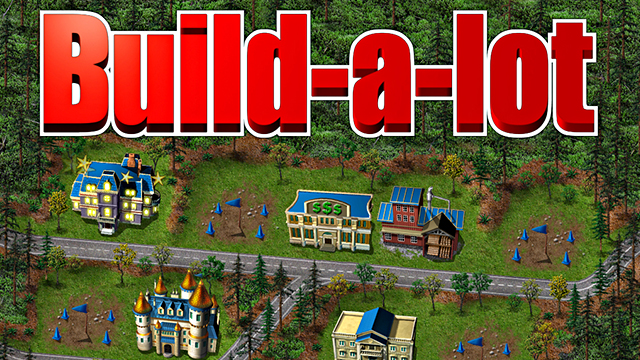
From Skeptic to Property Mogul in One Evening
I almost skipped Build-a-lot entirely. Real estate games sounded about as exciting as watching paint dry on actual houses. But after one level of buying lots, slapping down basic homes, and watching rental income tick upward, I understood why this 2007 HipSoft gem earned an 85 on Metacritic and still hooks players today.
The magic happens in those first few minutes when you realize you're not just building houses—you're solving efficiency puzzles with hammers and blueprints.
The Core Loop That Actually Works
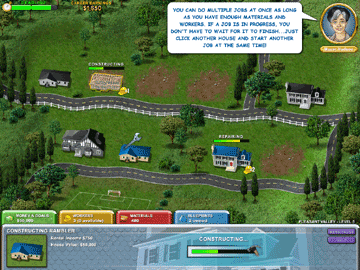
Each level drops you into a neighborhood with limited cash, a handful of workers, and specific goals to meet before time runs out. Maybe the mayor wants three mansions built, or you need to reach $50,000 in total property value. Your job: buy lots, construct houses, decide whether to flip them for quick cash or keep them as rental income generators, then reinvest profits into bigger, better properties.
The decision-making happens fast. Do you upgrade that cottage into a colonial for higher rent, or sell it now to fund a mansion blueprint? Every choice creates a cascade effect—more workers let you build faster, but they cost money that could buy materials. Premium houses generate better income but tie up capital you might need for the next objective.
What surprised me was how this simple loop creates genuine tension. I'd find myself frantically calculating whether selling two houses would give me enough cash to hire workers and complete a mansion before the deadline. The math never feels overwhelming, but it demands constant optimization.
Strategy Disguised as Casual Gaming
Build-a-lot sits in that sweet spot between mindless clicking and spreadsheet management. Unlike city builders where you're managing traffic flows and utility grids, this focuses purely on property economics. You're not waiting hours for buildings to complete—construction happens in seconds, keeping the pace snappy.
The appeal system adds another layer once you understand it. Well-placed buildings boost neighborhood desirability, which increases rent and sale prices. Suddenly you're thinking about property placement like a chess player, not just filling empty lots randomly. A mansion next to a park commands higher prices than one squeezed between basic houses.
Career mode's 35 levels across 8 neighborhoods keep introducing new wrinkles. One mayor wants you to build an ice rink for Olympic training. Another needs a cinema for the local movie star. These special buildings cost serious money and require specific blueprints, forcing you to completely rethink your usual strategies.
Where the Formula Shows Its Age
The repetition hits around level 20. Once you've mastered the optimal build order—usually starting with cheap houses for quick rental income, then upgrading systematically—many levels start feeling like variations on the same efficiency test. The core mechanics don't evolve much beyond "build more expensive things faster."
The interface also takes some getting used to. Managing workers, materials, and money requires clicking through several menus, and the small building icons can blur together during hectic moments. It's not broken, but it feels less polished than modern casual games.
Perfect for Strategic Snacking
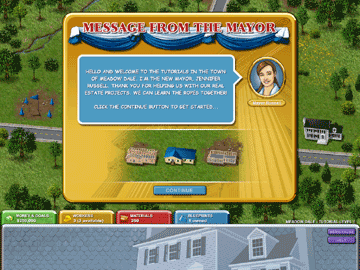
Build-a-lot works best in 30-45 minute sessions. Each level provides a complete challenge arc—you start broke, scramble to establish income, hit your stride with smart investments, then race to complete objectives. It's satisfying in the same way as solving a crossword puzzle, with the added pleasure of watching your property empire grow.
The casual mode removes time pressure entirely, letting you focus on reaching cash targets at your own pace. This mode reveals the game's zen-like qualities—there's something deeply satisfying about systematically upgrading an entire neighborhood from cottages to mansions while rental income piles up.
For players who enjoyed games like Diner Dash but wanted something with more strategic depth, Build-a-lot delivers exactly that. It respects your intelligence without overwhelming you with complexity, and every decision feels meaningful without being stressful.
The Verdict: Still Worth Your Evening
Build-a-lot proves that great casual games don't need flashy graphics or complex systems—they need tight mechanics and clear goals. Yes, it shows its 2007 origins in the interface and graphics. And yes, the formula can feel repetitive after extended play. But when you're in the zone, optimizing property portfolios and racing against deadlines, none of that matters.
This is perfect for players who want strategic thinking without homework, property management without spreadsheets, and the satisfaction of building something profitable in bite-sized sessions. If you've ever enjoyed puzzle games or light strategy titles, Build-a-lot will likely hook you for at least a few evenings of virtual real estate empire building.
Ready to play? Download the free trial of Build-a-lot and start playing today.