Games Like Diner Dash: 9 Time Management Games to Play Next
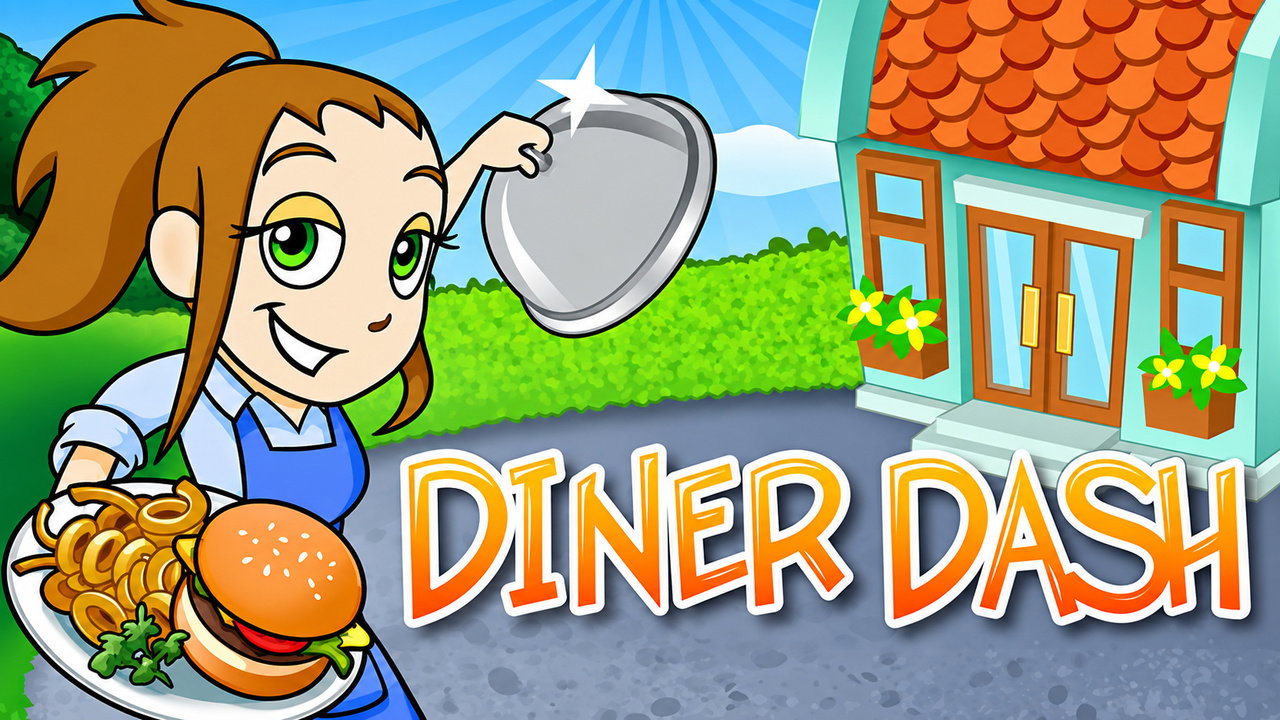
If you are looking for games like Diner Dash, you probably know the exact moment you are chasing: four tables waiting, a customer tapping her foot, and you chain seat, order, serve and clear into one perfect color-matched combo. Then the level ends and you want that feeling again, in a new restaurant.
Below are nine PC games that deliver it. Some are Flo's own sequels, some keep the rhythm and change what you are juggling. Every one has a free trial, so you can test the feel before you commit.
Quick Picks: Games Like Diner Dash at a Glance
- Want more Flo: Diner Dash 2: Restaurant Rescue or Diner Dash: Flo on the Go
- Want a production line instead of tables: Cake Mania or Burger Island
- Want a story with your service: Delicious Deluxe
- Want the same loop, no food: Sally's Spa, Jojo's Fashion Show or Nanny Mania 2
- Want pure speed: Turbo Subs
Haven't played the original yet? Start with Diner Dash itself. It still teaches the genre better than anything that came after, and our Diner Dash tips guide covers the combo tricks that push you to expert scores.
Why Diner Dash Is So Hard to Replace
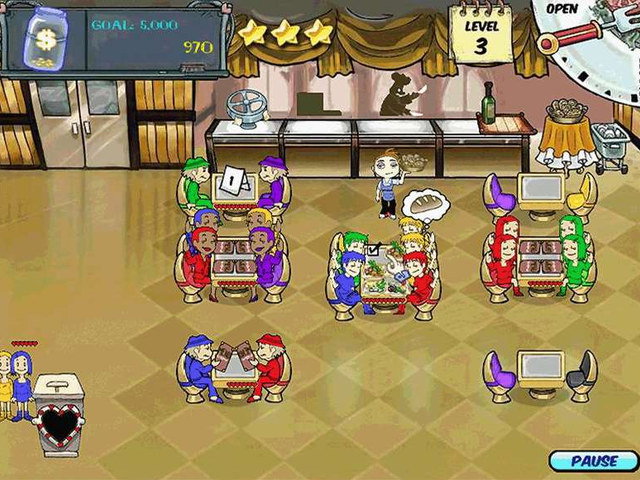
Diner Dash works because every action chains into the next one. Seat the green-shirted couple at the green chair and you get a bonus. Take two orders in a row and the multiplier ticks up. Real restaurants are chaos; Flo's restaurant is a puzzle you can solve if you plan the route.
The problem is that plenty of later games pile on cooking mini-games, waiting timers or resource menus that break that rhythm. The picks below keep the tight loop intact and change one thing at a time.
The Direct Sequels: More Flo, Same Formula
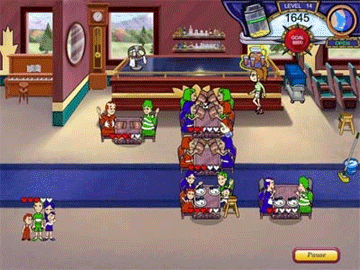
Diner Dash 2: Restaurant Rescue is the obvious next step. Flo helps fellow restaurant owners fight off a greedy tycoon, and the core loop stays the same: seat, order, serve, clear. Each restaurant adds one wrinkle on top. By the fourth location you are running eight tables and the old habits from the first game start to strain.
What works here is restraint. Customer types behave the same way everywhere, so your muscle memory carries over while the room layouts force new routes.
Diner Dash: Flo on the Go sends Flo on vacation, and the settings turn into constraints. Cramped quarters make every step count, so you start batching trips instead of running back and forth. It is the best of the three if you already know the basics and want the routing to bite harder.
Cake Mania: Baking Under Pressure
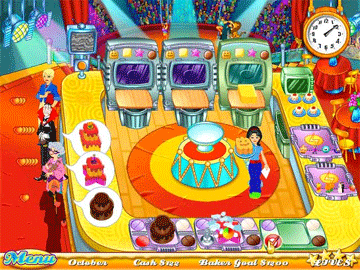
Cake Mania moves the pressure from the floor to the kitchen. Take the order, bake the layers, frost, decorate, then ring the customer up before her patience hearts run out. The oven timer becomes your metronome: leave a cake in too long and you start over.
Where Diner Dash is about routing, Cake Mania is about sequencing. You start the next cake while decorating the current one, so three orders sit at three different stages at once. If you love that "plates spinning" feeling, this is the closest match on the list, and the series runs several games deep.
Delicious Deluxe: Diner Dash With a Story
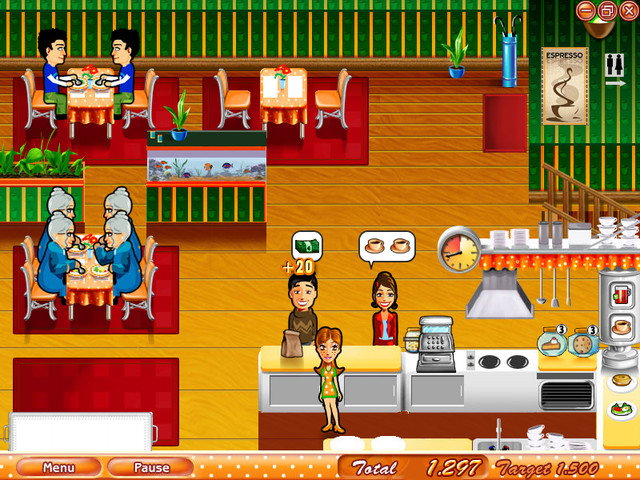
Delicious Deluxe is the first game in the Emily series, and it is the one Diner Dash fans tend to adopt as their second home. You seat guests, prepare orders and serve them across seven locations, climbing from a small café toward fine dining.
The difference is the pull of Emily's story. You stop playing "one more level" for the score and start playing it to see what happens to her restaurant. There is also an Endless mode for when you just want nonstop service. If it clicks, there are many more Emily games after this one, right up to the brand-new Delicious: Recipe for Renewal.
Burger Island: Streamlined Beach Service
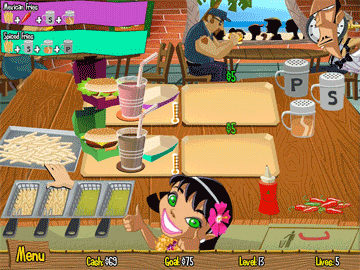
Burger Island strips the formula down to the counter. No seating, no clearing dishes, just building burgers in the right order while customers line up. Grill the patty, toast the bun, stack the toppings, pour the drink.
Without tables to route between, you notice how much of Diner Dash was really about timing. When do you start the next patty? Which toppings can you prep before the rush? It is a good pick on nights when you want the speed without the floor plan.
Sally's Spa: Same Loop, Calmer Setting
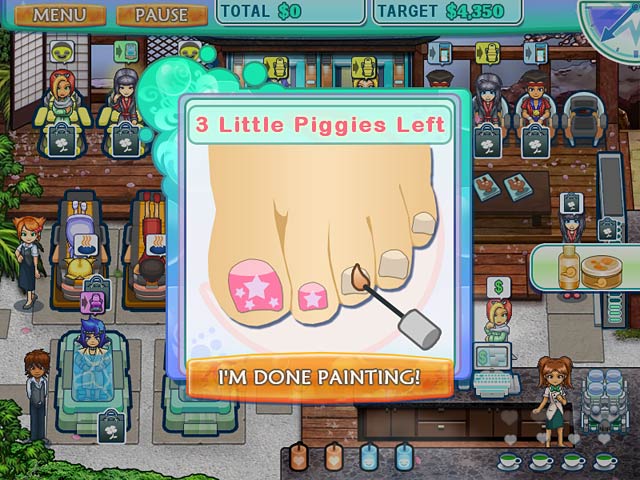
Sally's Spa is Diner Dash in a robe. Seat clients, move them from treatment to treatment, and get them out happy before patience runs thin. It plays almost exactly like a restaurant shift, with treatment stations in place of tables.
What changes the feel is the upgrade layer. You buy faster equipment and hire helpers between levels, so you are planning the next shift as well as surviving this one. The music and pace feel gentler, even when the waves of customers get just as heavy.
Jojo's Fashion Show: Runway Pressure
Jojo's Fashion Show proves the formula works far from a kitchen. Models arrive, you dress them to match the show's theme, and send them down the runway before the audience gets bored.
The twist is taste. Instead of following a fixed recipe you are choosing outfits that score with the crowd, so you balance speed against style. It is the pick for players who want a creative decision inside every timed rush.
Nanny Mania 2: Time Management at Home
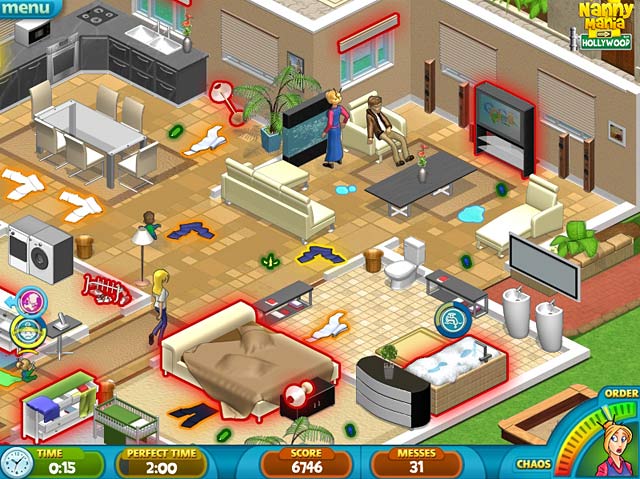
Nanny Mania 2 swaps the restaurant for a celebrity mansion. Across 50 levels you tidy, scrub, mop, cook and keep restless kids entertained, room by room, while the mess spreads faster than you can clean it.
It scratches the same priority itch as Diner Dash: what do I fix first before something else boils over? The difference is that the house fights back, so the game feels more like firefighting than service.
Turbo Subs: Pure Speed
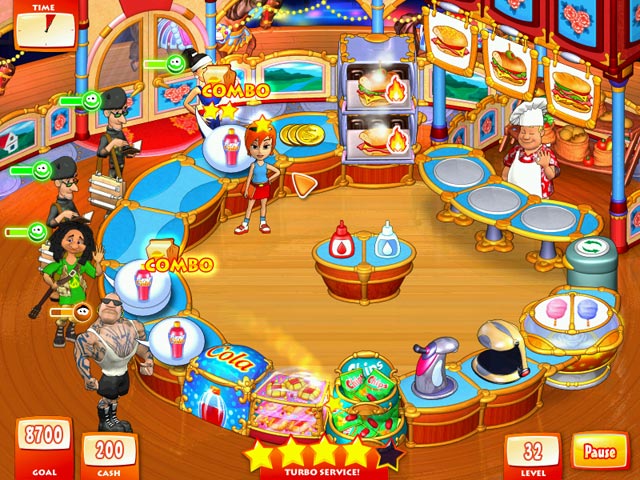
Turbo Subs puts you behind the counter of a busy New York deli. Build sandwiches to order, chain combos, and spend your earnings on upgrades that make the shop faster.
It is the most frantic game here. Where Delicious slows down for story, Turbo Subs keeps the line moving and asks you to keep up. Pick it if your favorite part of Diner Dash was the last 30 seconds of a level.
How These Compare to Diner Dash
Pacing first: the Diner Dash sequels, Turbo Subs and Burger Island are constant clicking with no downtime, while Sally's Spa and Delicious give you breathers between shifts for upgrades and story. Cognitive load is where they split: Diner Dash and Sally's Spa are spatial (where do I walk next), Cake Mania and Burger Island are sequencing (what do I start next), and Nanny Mania 2 is triage (what is about to go wrong). Agency stays high in all of them; none of these games has you waiting on a timer while nothing happens.
Which Game Like Diner Dash Should You Play?
Pick Diner Dash 2 if you want the same game with new rooms. Pick Cake Mania if you want the juggling without the floor plan. Pick Delicious Deluxe if you want a series you can follow for years. Pick Sally's Spa or Jojo's Fashion Show if you are tired of food. Skip Turbo Subs if you like a relaxed pace, and go straight to it if you do not.
Still hungry? Browse every time management game for PC on GameFools. Each one has a free trial, so the worst case is a free hour well spent.