Games Like Cake Mania: The Best Time Management Alternatives
When Cake Mania Changed Everything
Picture this: you're three customers deep, one wants a chocolate layer cake with pink frosting, another needs a simple vanilla cupcake, and the third is tapping their foot impatiently for a wedding cake you haven't even started. Your oven timer is beeping, the frosting machine needs refilling, and that businessman in the corner just lost another patience heart.
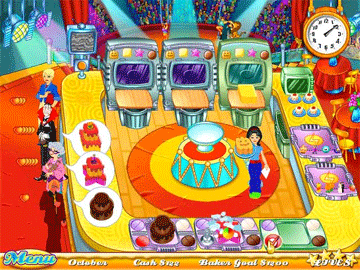
This is the beautiful chaos that Cake Mania introduced to casual gaming back in 2006. What started as Jill's quest to save her grandparents' bakery became the blueprint for an entire subgenre of time management games that turn simple tasks into heart-pounding multitasking marathons.
The magic happens in those split-second decisions: do you start the complex order first and risk the simple customer walking out, or serve the easy ones quickly to keep everyone happy? Each level becomes a puzzle of prioritization wrapped in the satisfying rhythm of bake-frost-serve-repeat.
The Original Cake Mania Experience
The first Cake Mania drops you into Jill's shoes as she fights to keep the family bakery alive against corporate competition. What makes this game special isn't just the baking theme—it's how every action costs precious seconds. You can't just mindlessly click through orders; you need to plan your route through the bakery, time your oven usage, and read customer patience levels like a short-order cook during the breakfast rush.
The difficulty curve hits differently than most casual games. Those first few levels lull you into thinking this is a gentle baking simulator, then suddenly you're managing six customers simultaneously while your equipment breaks down. The learning curve takes several levels to master, but that moment when you finally nail a perfect rush feels like conducting an orchestra.
Between levels, you spend earnings on upgrades that genuinely change how you play. Better shoes let Jill move faster, additional ovens prevent bottlenecks, and customer entertainment keeps patience meters stable. These aren't just number tweaks—they're strategic choices that reshape your entire approach to the next challenge.
Cake Mania 2: Choosing Your Path
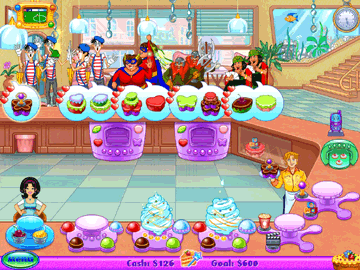
Cake Mania 2 expands the formula by letting you decide Jill's future through your gameplay choices. Instead of following a single storyline, your performance and decisions unlock different paths—maybe Jill opens a fancy restaurant, or perhaps she sticks with the cozy bakery life.
The core mechanics feel familiar but refined. Customer orders become more elaborate, requiring multiple decoration steps and precise timing. Where the original game sometimes felt like controlled chaos, this sequel rewards players who develop genuine systems for handling the rush. You start recognizing customer types by sight and pre-planning your production queue several orders ahead.
What surprised me most was how the branching storyline actually affects gameplay motivation. Knowing that your speed and efficiency scores influence which ending you unlock adds weight to every level. It's not just about surviving the rush anymore—you're actively working toward the version of Jill's story you want to see.
Main Street: Building a Community
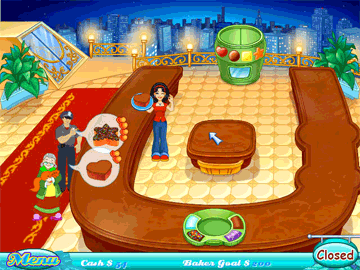
Cake Mania: Main Street shifts focus from personal survival to community rebuilding. Jill's earnings now fund the restoration of her entire hometown, turning each successful bakery day into progress toward revitalizing local businesses and bringing neighbors together.
The production complexity reaches new heights here. Customers request elaborate multi-layer creations that require careful sequencing across multiple stations. You might start a wedding cake base while simultaneously decorating cupcakes and taking new orders. The cognitive load jumps significantly—this isn't a game you can play while half-watching TV.
But the payoff feels more meaningful than pure score chasing. Every few levels, you see another building restored or a new neighbor return to Main Street. The time management pressure serves a larger purpose, making those stressful rushes feel like community service rather than just personal achievement.
Lights, Camera, Action: Family Expansion
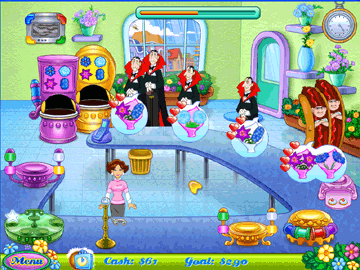
Cake Mania: Lights, Camera, Action finds Jill managing the bakery while preparing for a new baby—a premise that adds emotional weight to the familiar time pressure mechanics. The Hollywood setting brings celebrity customers with outrageous demands, but the real tension comes from balancing work responsibilities with personal life changes.
This entry pushes the multitasking elements furthest. You're not just managing customer queues; you're juggling phone calls, dealing with equipment malfunctions, and handling special celebrity requests that interrupt your normal workflow. Some customers want custom photo cakes, others demand specific presentation styles, and a few require you to completely reorganize your production line mid-rush.
The difficulty can feel overwhelming initially, especially when VIP customers arrive during your busiest moments. But the game teaches you to think several moves ahead, preparing for disruptions before they happen. By the final levels, successfully managing a full rush while handling three special requests feels like mastering a complex dance routine.
Comparing the Time Management Styles
Each Cake Mania game approaches time pressure differently, and understanding these differences helps you pick the right starting point. The original focuses on pure speed and efficiency—you're optimizing a single production line under increasing pressure. Cake Mania 2 adds decision-making layers, where your choices between levels matter as much as your in-level performance. Main Street emphasizes resource management and long-term planning, while Lights, Camera, Action tests your ability to adapt when unexpected demands disrupt your routine.
Where traditional puzzle games give you unlimited time to think, and action games test reflexes, these games occupy a unique middle ground. You need quick decision-making skills, but also the strategic thinking to plan several steps ahead. The cognitive load sits somewhere between playing chess speed rounds and working a busy restaurant shift.
Player agency varies significantly between entries. The original Cake Mania mostly watches your execution of a predetermined strategy. Main Street lets you choose upgrade priorities that reshape future challenges. Lights, Camera, Action constantly forces adaptation, making you react to situations you couldn't have planned for.
Who Should Start Where
If you've never played time management games before, start with the original Cake Mania. Its difficulty curve teaches the fundamentals without overwhelming you, and the upgrade system clearly shows how strategic choices affect gameplay. Expect to spend 8-10 hours mastering all levels, with individual sessions lasting 15-20 minutes.
Players who enjoy branching narratives should jump straight to Cake Mania 2. The multiple story paths add replay value, and knowing your performance influences the ending creates extra motivation during difficult levels.
If you prefer games with broader strategic elements, Main Street offers the most satisfying long-term progression. Building an entire community feels more substantial than just improving bakery efficiency, though the increased complexity might frustrate players seeking simple stress relief.
Skip Lights, Camera, Action unless you've already mastered the earlier games. Its constant interruptions and celebrity demands create genuine stress that some players find more exhausting than entertaining. But for time management veterans, it offers the series' most demanding and rewarding challenges.