Mystery Case Files: Ravenhearst Is Still Worth Playing in 2026
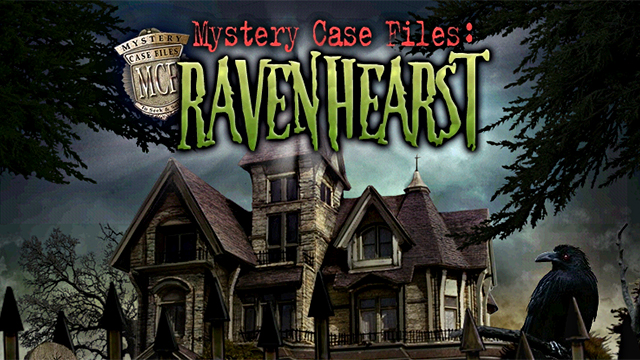
Why Ravenhearst Feels Different From Modern Hidden Object Games
You click on a dusty portrait in Ravenhearst Manor, and nothing happens. No sparkles, no chimes, no helpful outline. Just silence. Then you notice the portrait's eyes seem to follow you, and suddenly you're examining every inch of the frame until you spot the tiny mechanism hidden in the corner. This is Mystery Case Files: Ravenhearst—a game that assumes you can think.
Released in 2006, this Victorian mystery adventure refuses to hold your hand the way modern hidden object games do. Instead of glowing hotspots and obvious hints, Ravenhearst drops you into a genuinely creepy manor with Emma Ravenhearst's scattered diary pages and expects you to piece together both the mystery and the gameplay mechanics yourself.
The Detective Work Actually Feels Like Detective Work
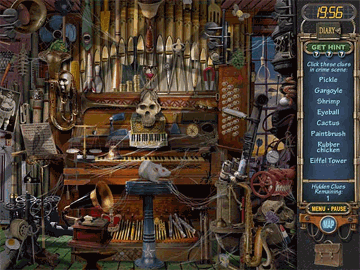
Each room in Ravenhearst presents you with a detailed scene packed with Victorian-era objects. Your list might ask for "something that opens doors" or "a tool for writing," forcing you to think about what these items actually are rather than just matching words to pictures. I spent ten minutes in the library looking for a "writing implement" before realizing the quill pen was tucked behind a stack of leather-bound books.
The real genius lies in how items connect across rooms. Find a brass key in the parlor, and it might unlock a music box three rooms away that contains another diary page. This creates actual investigation rather than simple scavenger hunting. You're not just finding objects—you're building a mental map of the manor and tracking how Emma's story unfolds through each discovered page.
The door puzzles deserve special mention. These aren't your typical sliding tile arrangements. Instead, you encounter elaborate mechanical contraptions that feel like Victorian-era Rube Goldberg machines. One door requires you to manipulate a series of gears, pulleys, and weights in the correct sequence. Another involves aligning mirrors to direct light beams. These puzzles can take 20-30 minutes each, but solving them feels like cracking an actual Victorian-era security system.
Emma's Story Hooks You Room by Room
What separates Ravenhearst from other hidden object games isn't just the challenging puzzles—it's how the story reveals itself through environmental details. Emma Ravenhearst wasn't just the manor's previous owner; she was trapped here by her husband Alister Dalimar, and her diary pages reveal a tale of supernatural imprisonment and desperate escape attempts.
Walking through her former bedroom, you'll find personal items that tell pieces of her story: a wedding photo with Alister's face deliberately scratched out, letters hidden inside jewelry boxes, medical instruments that hint at sinister experiments. The manor itself becomes a character, with rooms that seem to shift and change as you uncover more of Emma's past.
This environmental storytelling creates genuine atmosphere. Unlike games that dump exposition through cutscenes, Ravenhearst makes you work for every story detail. Finding a diary page feels rewarding because you've earned that piece of the puzzle through careful exploration and problem-solving.
The Challenge That Made Players Famous
Ravenhearst earned a reputation for difficulty that still intimidates players today. Some puzzles require genuine lateral thinking—the kind where you might stare at a mechanism for fifteen minutes before the solution clicks. The game provides minimal hints, and when you do get stuck, you're truly stuck until you figure it out yourself.
This uncompromising approach frustrated some players in 2006, and it might frustrate you now. But for mystery fans who enjoy the satisfaction of solving genuinely challenging puzzles, this difficulty feels refreshing. Modern hidden object games often feel like interactive movies with puzzle breaks. Ravenhearst feels like an actual mystery you need to solve.
The pacing reflects this philosophy. You might spend 45 minutes in a single room, carefully examining every object and testing different item combinations. This isn't a game you play while multitasking—it demands your full attention and rewards careful observation.
How It Holds Up Against Modern Games
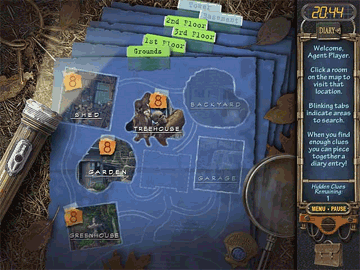
Compared to contemporary hidden object games, Ravenhearst moves much slower and requires significantly more brain engagement. Where modern titles like the newer Mystery Case Files entries guide you with sparkles and hint systems, Ravenhearst expects you to notice that the clock hands point to a specific time that might be important later.
The graphics, while dated, still create effective atmosphere. The hand-painted rooms capture Victorian gothic aesthetics without feeling cartoonish. Character portraits and diary illustrations maintain a consistent art style that supports the serious tone. You won't mistake this for a modern game, but the visuals serve the mystery well.
The sound design particularly shines. Creaking floorboards, distant whispers, and subtle musical cues create tension without overwhelming the investigation. The audio cues often provide the only hints you'll get about interactive objects, making careful listening part of the puzzle-solving process.
Worth Noting: The Learning Curve
New players should expect to feel lost for the first few rooms. Ravenhearst doesn't explain its logic system or teach you how items might connect across different areas. The game assumes you'll experiment with different approaches until you understand its internal rules.
This trial-and-error period can feel frustrating if you're used to more guided experiences. But once you adapt to Ravenhearst's puzzle logic, the satisfaction of solving its challenges without external help becomes addictive. The game trains you to think like a detective rather than a casual gamer.
The Verdict: A Mystery Worth Solving
Mystery Case Files: Ravenhearst remains compelling because it treats players like intelligent adults capable of solving complex puzzles without constant guidance. The Victorian setting, challenging door mechanisms, and environmental storytelling create an experience that modern hidden object games rarely match.
This works best for players who enjoy methodical investigation and don't mind getting stuck occasionally. If you prefer faster-paced games with clear progression markers, Ravenhearst might feel tedious. But for mystery fans who want to feel like actual detectives uncovering a supernatural conspiracy, few games deliver this level of immersive puzzle-solving.
After twenty years, Ravenhearst still stands as proof that hidden object games can be genuinely challenging and atmospheric. Emma's story deserves to be discovered, and the manor's secrets reward patient investigation. Just don't expect the game to make solving them easy.
Ready to play? Download the free trial of Mystery Case Files: Ravenhearst and start playing today.